
menus. — F&B Management Platform
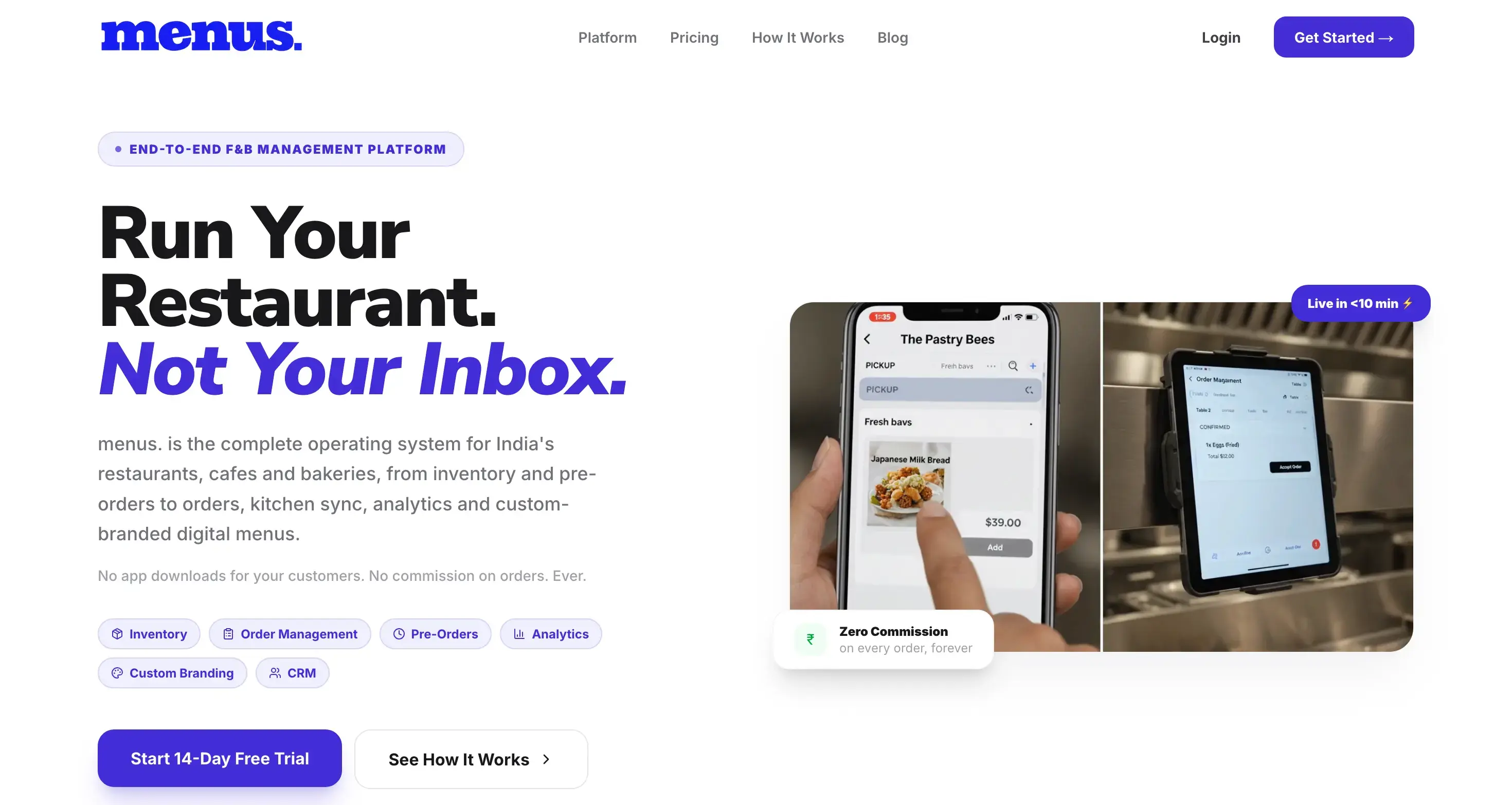
A full-stack F&B management platform built by Devtoniq with Next.js. menus. brings digital menus, ordering, pre-orders, inventory, kitchen management, analytics, CRM, and custom branding into a single system designed specifically for restaurants, cafés, and bakeries.
More From This Project
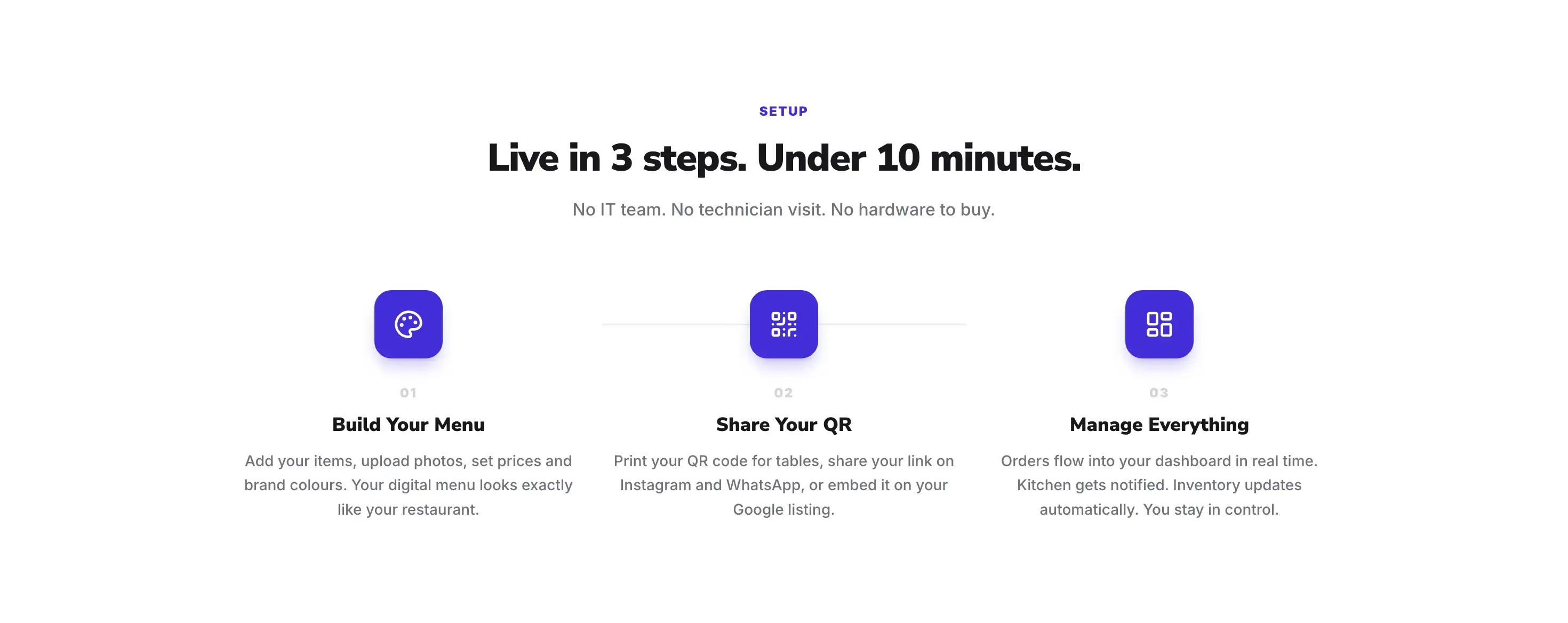
menus. — F&B Management Platform
Overview
menus. is a full-stack restaurant management platform built by Devtoniq to bring the fragmented operations of restaurants, cafés, and bakeries into one system.
Instead of treating the project as a simple digital-menu application, we approached it as a complete product ecosystem—with customer-facing ordering experiences connected to operational tools for inventory, orders, kitchens, analytics, and customer management.
The platform was built with Next.js, with the architecture designed to support multiple types of users, workflows, and business requirements.
The Concept
Restaurants often rely on a collection of disconnected tools: one for menus, another for orders, spreadsheets for inventory, messaging apps for pre-orders, and separate systems for customer information and reporting.
menus. was designed around a different idea: one connected system where these workflows can communicate with each other.
An order shouldn't simply be recorded—it should affect inventory, appear in the appropriate dashboard, inform the kitchen, and contribute to the restaurant's customer and sales data.
That interconnectedness became the foundation of the product.
Product Experience
The platform combines several core capabilities into a single operating system:
- Digital QR menus
- Dine-in, takeaway, and delivery orders
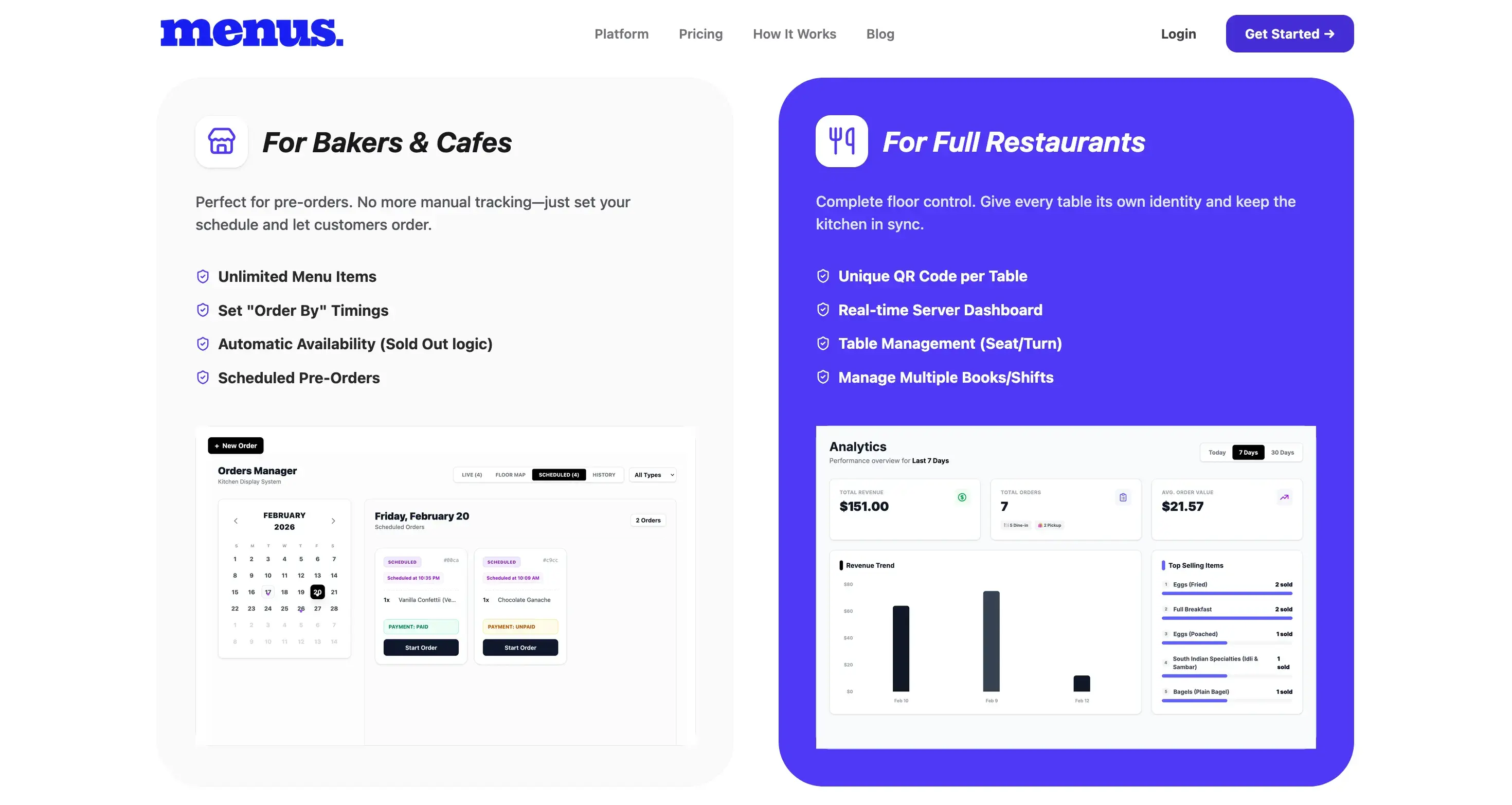
- Scheduled pre-orders
- Real-time inventory tracking
- Automatic sold-out logic
- Kitchen dashboard and synchronization
- Table management
- Customer profiles and order history
- Sales and revenue analytics
- Menu branding and customization
- Role-based staff access
- Multi-location management
The customer-facing experience is intentionally lightweight—customers can scan a QR code and access a restaurant's menu directly from their browser without downloading an app.
Full-Stack Architecture
The core challenge was connecting multiple operational workflows while keeping the experience simple for both customers and restaurant staff.
We built the system as a full-stack Next.js application, bringing the front-end experience and application logic together within a unified architecture.
This included designing and implementing the different interfaces and workflows required for restaurant operators, staff, kitchen teams, and customers.
Particular attention was given to data relationships and real-time state changes. For example, when inventory changes, menu availability needs to reflect that change; when an order is placed, the relevant operational views need to update; and customer orders contribute to the data available for analytics and CRM.
Designing for Different Users
A restaurant platform has very different users with very different needs.
Customers need an extremely fast and frictionless ordering experience.
Staff need clear information about active orders and tables.
Kitchen teams need actionable order information without unnecessary interface complexity.
Owners and managers need a higher-level view of revenue, inventory, customers, and business performance.
The product was therefore designed around these distinct workflows rather than forcing everyone into the same interface.
Building for Scale
The system was also structured with growth in mind.
The product supports different subscription tiers, role-based access, and multi-location management, while the Enterprise offering provides a foundation for APIs, webhooks, custom integrations, and white-label implementations.
This makes the underlying product architecture more than a single-restaurant solution—it provides a foundation that can evolve into a larger SaaS platform.
What We Built
- Full-stack application using Next.js
- Customer-facing digital menu
- QR-based menu access
- Ordering workflows
- Pre-order and scheduling system
- Inventory management
- Automatic availability and sold-out logic
- Kitchen dashboard
- Table and order management
- Customer management / CRM
- Analytics and reporting
- Custom menu branding
- Role-based access
- Multi-location architecture
- SaaS subscription structure
- Responsive interfaces across customer and admin experiences
- Dedicated Mobile App with live updates and notifications
Final Thoughts
menus. brings multiple restaurant workflows into one connected platform. The value isn't simply that a restaurant can put its menu online. The system connects the **menu → order → inventory → kitchen → customer → analytics** lifecycle, allowing information generated in one part of the platform to become useful elsewhere. The result is a product designed to reduce operational friction while giving restaurants greater ownership of their ordering and customer data.
Let's work togetherYou Might Also Like
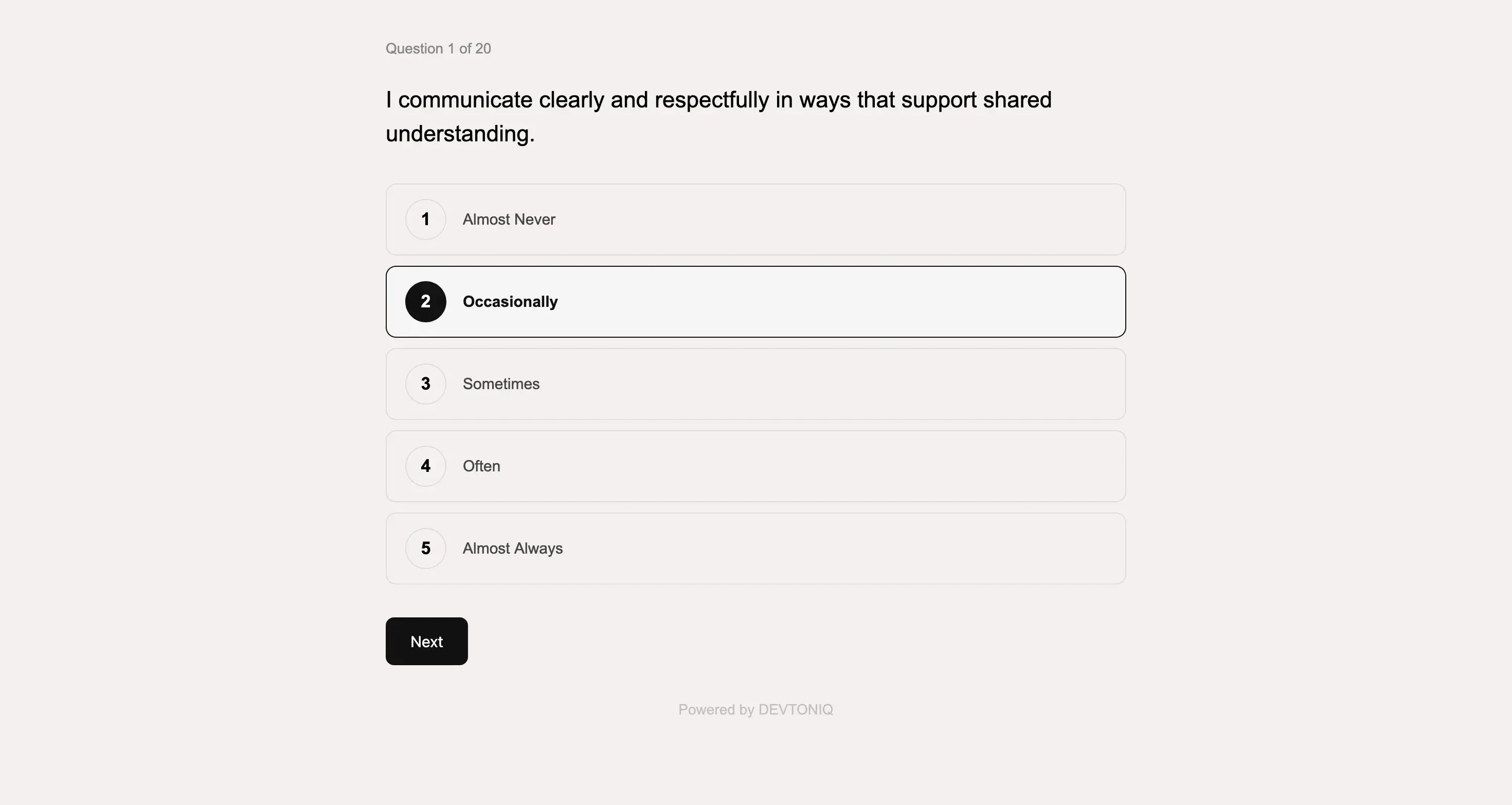
Custom Quiz & Assessment Platform
A custom interactive quiz and assessment platform built from a detailed client brief. I translated the client's questions, scoring logic, and result requirements into a complete experience—from the front-end Q&A flow to automated scoring, backend response management, and personalized email results.

Elia — Multi-Platform Website Template
Elia is a modern, editorial-inspired website template designed for creative entrepreneurs, agencies, and personal brands. Built by Devtoniq, the template combines bold typography, expressive layouts, and conversion-focused sections to create a polished digital presence without sacrificing usability.

Intentional Money Life
A complete website and learning platform for Intentional Money Life, designed and built from scratch to make financial education feel approachable, personal, and actionable. From the visual direction and responsive website to the LMS setup and course experience. We handled the project end-to-end using the client’s existing brand assets, photography, and content.